Posts

When was the last time we actually treated adults like adults?

It is tempting. When we see someone we care for is making decisions or has made a decision contrary to what we would have  our instinct tries to tell them what to do  Maturity lies in stepping back and trusting that people are mature enough to figure out what to do At the end of the day, it is their life, it is their choice  it’s more valuable to provide support and encouragement without giving unsolicited advice Give people space to make their own decisions,  even if they decide to take the scenic route that we  definitely wouldn’t have chosen Good or bad, it leads them down paths that they themselves have chosen they’ll probably make it to the end with a few bumps and a lot of lessons. Remember, the last thing we want to do is say "I told you so"
Anomalies in life

We cannot tell anyone about that one person with whom we share everything  Society often has its own rules or expectations, and societal rules about what’s "acceptable" or "normal" can be restrictive. Relationships are indeed complex and don't fit into what society finds acceptable.  The deepest bonds are the ones that remain outside the lens of society’s expectations, and the beauty of those relationships lies in their privacy. We confide when there is quiet understanding and unspoken trust, where we can just be without being judged or seeking validation.  The world is never going to agree on a definition of who you are.  We will always be brave in someone's mind and coward in another's, strong to one and fragile to another, good to one and terrible to another. We will be seen as annoying to one and comforting to another. Some will feel anxious around us and some will find peace in our company. Some will see us as "too much" while others wil...

Bend it

All of us are guilty of bending the reality. At times, the truth feels too harsh or overwhelming and People bend reality believing that it can hopefully shield us from the pain of confronting an uncomfortable reality. Bending reality has both its pros and cons. Denial, self-deception, or reinterpretation, can serve as a protective mechanism, allowing us to navigate difficult situations or emotions. but there’s also a danger in it as it might prevent us from truly facing what's happening or growing from it. Some just bend enough to make peace while some bend it like Beckham. Either way our moral compass decides the degree of the bend. I wonder if people ever introspect and gauge how much is too much?

Weekend thoughts..

This weekend, I was pondering if I talk too much? The balance between speaking up and knowing when to hold back can be tricky, especially in an office setting. People can feel the pressure to speak up just to be noticed or show they're contributing. People often speak to fill up space rather than speak when they have something valuable or thoughtful to add. Thinking about this I have come to realize, I  talk less but I do have an opportunity to reduce even more -  the more we experience the less we speak.  It’s not because I have less to say, but because I understand more deeply that not every thought needs to be voiced - Intelligent people listen a lot more and speak only when absolutely necessary. - They share advice only when asked - Feedback is a gift. don't waste a gift by giving it to people who you don't care about

Experiment - Elephant in Our Mind and the Moon

Today, I listened to the audiobook The Elephant in Our Mind: Uncovering the Truth Behind Our Actions , and it really got me thinking. In Chapter Two, the author explores how we often weave stories about our choices, painting ourselves either as heroes or victims. This art of justification helps us align our past decisions with our present self. But here's the catch: these stories can distort the truth. One of the key concepts discussed is hindsight bias —a memory distortion that makes us believe we "knew it all along." In other words, based on what we know now, we tend to convince ourselves that we always saw the outcome coming. What struck me the most is how the stories we tell ourselves are shaped by the lenses we choose to view events. We tend to justify our actions by looking at them through a particular filter—often influenced by current beliefs or emotions. The author suggests an alternative approach: journaling the pivotal moments in our lives as they are , without...

Saturday day night randomness

There is no bigger wealth in this world than peace of mind No matter how much money or possessions you have, If your mind is still restless you are unsuccessful We realize the importance of what we have only when we no longer have it Time and circumstances can shift in the blink of an eye. Don't get too caught up in moments of excessive joy or sorrow. Fly high if you don't want to be bothered with the small tree obstacles  If we speak too much, we will lie, a fish with its mouth shut will never be hooked if we think too much we will be depressed or obsessed People call me up for advice, just because I advise them does not mean I am smarter than them, I just have made more mistakes than them In fact, they are smarter because they take advise 

Sankaranti and Kites

Image
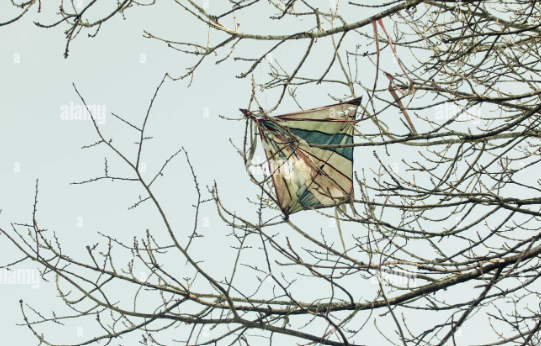
 During Makar Sankranti, flying kites is a popular tradition across India, a vibrant part of the festival that marks the transition of the Sun into the zodiac sign of Capricorn (Makar). This event signals the end of winter, the arrival of longer days, and the beginning of the harvest season. People fly kites for several reasons, both symbolic and celebratory. It is believed that the act of flying kites on Makar Sankranti represents the elevation of one’s spirit. As the kites soar high into the sky, they symbolize the soul’s journey toward the divine, aiming for a higher purpose or enlightenment. The bright, vibrant kites also stand as a symbol of the triumph of light over darkness, with the longer days following the winter solstice. It’s a celebration of hope, renewal, and the start of new beginnings. People often begin flying kites a week before Sankranti and continue for a couple of days after, creating an atmosphere of joy and excitement. As I was walking Kuku last week, I notic...

Divine timing.

In one of my conversations with Sweety, I realized, "God gives me what I need when I need it", It could be sending me people, or finding material (in blogs, magazines, or in social media) or just things that enable me to get something done or just reminders about doing something that may have slipped my mind. Sometimes, I wonder if it is about a grand miracle/dramatic intervention or if it's more subtle. It does seem so perfectly timed that it feels too synchronized to be a mere coincidence. The Timing is just divine. When things arrive, they are rarely early and never too late. It's that sweet spot where the lesson or help can be fully absorbed and utilized. I've noticed these interventions come in various forms: - The Right People at the Right Time Like when Sweety and I have some conversation – it may be just some normal chat but later when I think about it - it was the clarity I didn't even know I needed. Then there are some people who enter our lives brie...

Why We Do What We Do

 In our lives, we often find ourselves taking on tasks, helping others, or going the extra mile—sometimes even when no one has asked us to. It could be something as simple as staying late at work, offering assistance to a friend who never requested it, or doing more than what’s expected in our personal relationships with partners, kids, siblings, or parents. These actions may appear selfless at first glance, but sometimes they come from a much deeper, unspoken place. There’s a subtle pattern in human behavior that many of us don’t acknowledge openly: our constant need to prove our significance through actions that may go unnoticed or unrequested. We often stretch beyond what's required, not because it’s necessary, but because it feeds a deep-seated need to feel important. It’s not just about fulfilling responsibilities; it’s about feeling significant, about knowing that we matter. But why is this need so strong? After reflecting on this, I realized that there are a few key reasons ...

Replaceable

In a world that is constantly evolving, It’s easy to grow attached to people, possessions, or moments, but the reality is that, technically, everything in this life is replaceable. At first, this truth can be unsettling. It may make you feel like the things you value are temporary, or that nothing truly lasts forever. Walk into any organization, and you'll likely hear the phrase "no one is indispensable." Even Steve Jobs, the visionary founder of Apple, was once ousted from his own company. The world continued on without him. Iconic businesses once thought untouchable—Kodak, Nokia, Blockbuster—were replaced by new players. These examples serve as a stark reminder that market dominance is temporary, and even corporate giants can fall. In our personal lives, we experience similar cycles. Lovers find solace in new partners, children who lose parents find surrogate parental figures, and friends may drift apart only to form new, meaningful connections. The heart's remarkab...